
Don’t leave customer behaviour to chance.
Strong customer relationships are built on understanding—not assumption. Every interaction, every hesitation, every moment of delight contributes to a broader narrative that shapes how customers feel about your brand. Customer Journey Mapping brings that story into focus. It converts scattered data, behaviours and real-world experiences into a single, coherent view of the customer.
At R-cubed, we combine intelligence, insight and commercial clarity to create journeys that help guide your customers through your buying processes, meeting their needs and maximising their value. The result is a customer strategy that helps you improve experience, increase value and build engagement that lasts.
Why a customer journey matter
Customers move between channels and devices with ease. They expect relevance, speed and consistency wherever they encounter your brand. Without a complete picture of their experience, it’s impossible to design communications or journeys that truly meet their needs.
But a journey map only works when it reflects the entire lifecycle, not just the moments that are easiest to measure. We analyse the customer experience across five core stages, each with its own pressures, motivations and opportunities.
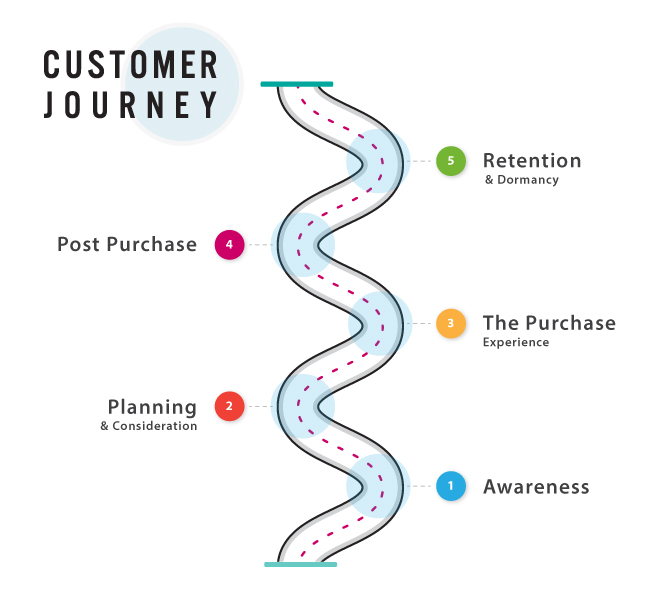
1. Awareness
Awareness is where customers first encounter your brand—sometimes intentionally, sometimes by chance. We explore how people discover you, what captures their attention, and which messages resonate early on. This stage reveals the perceptions that shape first impressions, the channels that genuinely drive visibility, and the barriers that prevent potential customers from moving forward. Understanding this helps you invest in the right acquisition activity, with more relevant messaging from the start.
Once a customer becomes aware of your brand, they begin weighing their options. They research, compare, question and explore. This stage is critical for building trust. We map what information customers look for, what reassurance they need, and what causes hesitation. Whether the decision involves commitment, price, risk or convenience, we highlight the moments where targeted communication and clearer explanation make the difference between interest and intent.
The purchase moment is where intention turns into action—but only if the experience feels straightforward and credible. We analyse the steps customers take as they move toward conversion: the interfaces they use, the service interactions they rely on, and the potential points of friction that can derail the decision. By understanding how customers navigate this stage, you can refine journeys to make purchasing feel effortless and reduce drop-off at the moments that matter most.
4. The post-purchase experience
This is where the real relationship begins. A strong post-purchase experience builds confidence, drives early engagement, and lays the foundation for long-term loyalty. We map the first days, weeks and months of ownership or usage. Opportunities often include better onboarding communications, personalised follow-ups, proactive service and timely prompts that nurture the relationship, enable cross-sell and up-sell and encourage repeat behaviours.
Customers rarely disengage suddenly. Dormancy is usually a gradual shift—reduced usage, weaker response, fewer interactions, declining spend. We identify these early warning signals and determine where and how re-engagement efforts can be most effective. Whether it’s a personalised reminder, added value, new benefits or a supportive check-in, this stage helps you reconnect with at-risk customers and extend their value over time. Understanding dormancy is essential for effective retention strategy and sustainable growth.
Learn more about enhancing the customer journey in this article.
How to build a customer journey that delivers change
Our process starts with the data – behavioural, transactional and digital. We uncover patterns, gaps and indicators that reflect how customers actually move through your brand.
This enables us to build customer journeys that focus on the key steps, identifying where customers thrive, where they struggle, and where the experience needs to work harder. Every customer journey we create includes clear, prioritised opportunities for improvement along with the measurement framework needed to track impact.
But journey mapping only becomes valuable when it leads to action. That’s why we ensure every insight can be operationalised – feeding into CRM strategies, communication plans, testing roadmaps and broader customer experience design.
Turning insight into intelligent action
Customer Journey Mapping guides smarter decision-making across your organisation. It helps you decide what to say, how to say it and when it will make the most difference. From shaping acquisition strategy to refining onboarding, enhancing engagement and strengthening retention, the insights become the foundation for more relevant, connected and commercial customer journeys.