

Target Operating Model
The importance of creating the right target operating model
We talk a lot about the importance of data and martech in your organisation, and we stand by that. But it’s equally important to ensure that your business is set up to take advantage of it.
A clear and appropriate target operating model (TOM) is critical to ensure smooth, effective and optimal delivery of your strategies. It provides clarity on how you should operate, turning ambition into action.
What is a target operating model?
A target operating model describes how an organisation is set up to deliver its strategy. It defines how people, process, technology and governance work together to achieve desired outcomes. Rather than focusing on isolated changes, it provides an integrated view of the organisation as a whole.
In simple terms, strategy defines where you want to go. The target operating model defines how the organisation needs to work to get there.
Why it is important to create a target operating model for your business?
Without a clear TOM, you’ll struggle to translate strategy into consistent execution. You may end up launching initiatives or changing structures without a clear view of how everyone will contribute to success. This can lead to misalignment and inefficiencies.
The right target operating model creates alignment across the organisation. It ensures that decisions about structure, investment and capability are made with a clear understanding of how they support strategic goals.
Your TOM should:
- Create clarity around roles, responsibilities and ways of working
- Improve efficiency by reducing duplication and unnecessary complexity
- Provides a stable foundation for transformation and change
- Supports scalability and future growth
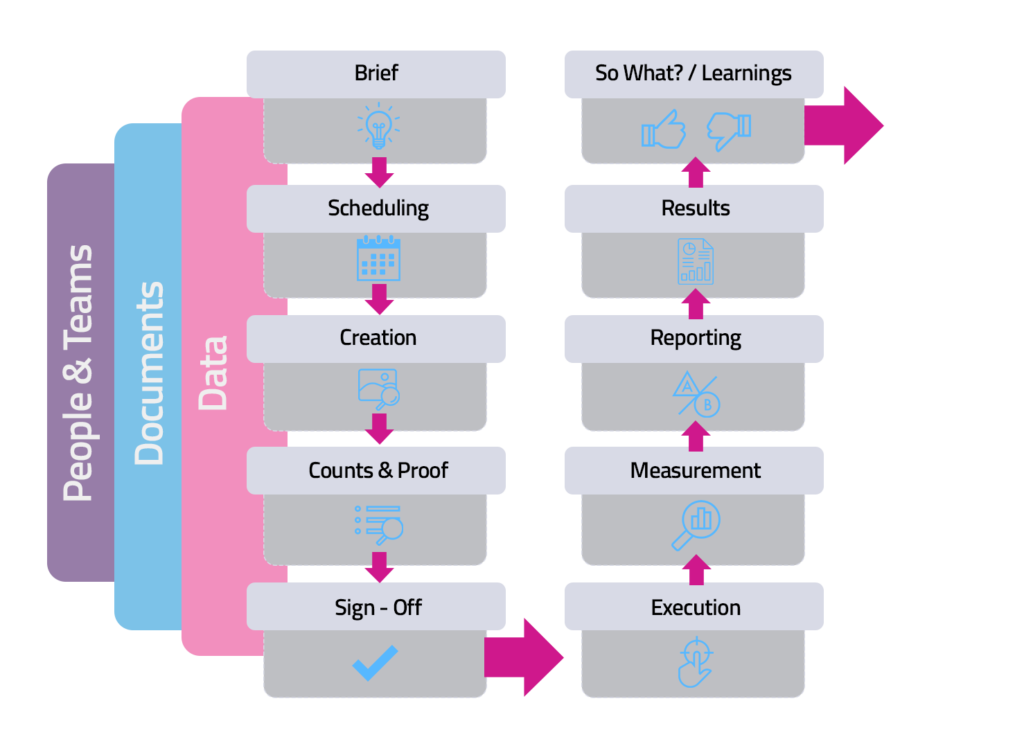
Key considerations for a Target Operating Model
Start with a clear understanding of your strategic priorities and objectives. The model should be explicitly designed to deliver those objectives.
This is a big – and often difficult issue to tackle. Who is responsible for what in your business? Do you need a single point of responsibility for customer comms, for example and risk making other teams feel undervalued? Or should you share the responsibility across all your customer channels, and risk having inconsistent customer experiences?
There’s no single correct answer and it depends on the nature of your business, the number of channels and the people in your business. An effective operating model can’t just be a theoretical exercise – it needs to account for the real world, including people’s working styles, emotions and all the power plays inherent in your business.
The operating model should be built around the needs of customers and users. Too many models result in poor customer experiences, such as uncontactable customer service, awkward online journeys and long lead-times. Plan how to deliver the optimal customer journey.
Consider the roles, skills, behaviours and capabilities required to operate your business.
That might mean out-sourcing some areas, if you don’t yet have the capability to run everything in-house. Don’t be afraid to choose the solution that works for you, even if it doesn’t look like the perfect solution right now. You can – and should – always develop your TOM over time.
Define clear end-to-end processes that show how work flows across functions. Well-designed processes reduce friction, improve consistency and support delivery.
What tech do you need to effectively run your business? If you settle for workarounds and inadequate systems, your delivery won’t be effective and your team will be frustrated by the friction.
Set out how the systems and tools that you need to support your people and processes.
One area where you should aim for a single point of responsibility, is customer data. Strong operating models have clear accountability. Someone senior owns the customer view. Someone owns the quality of the data. Someone owns how insight is used to make decisions. That doesn’t mean one team does everything, but it does mean responsibility is clearly defined and understood.
Without that clarity, data becomes political, poorly structures and stored, decisions slow down, and accountability disappears.
Finally, you need to decide what controls and performance measures you’ll have in place to ensure your model works as it should. Strong governance ensures clarity of accountability and effective decision-making.
Ready to get started?
When ownership is clear, leadership is engaged, and data is treated as a shared asset, everything else becomes easier. Technology delivers more value. Teams work with confidence. And growth becomes something you can manage, not just hope for.
That’s what a good operating model should do. So take an honest look at your existing structure and think about how you could do better.
And if you think that’d you’d do better to have your SCV set up by an external partner that will get you up and running quickly, while giving you complete control, why not get in touch?